Tuesday, October 2, 2018

Anolis sagrei (Duméril and Bibron, 1837) Introduced

Anolis sagrei has apparently been introduced into Port-of-Spain, Trinidad
A Brown Anole, Anolis sagrei, photographed in southern Florida. JCM
Size. Males to 70 mm, females 48 mm; hatchlings 16 mm SVL. Smallest sexually mature male 35 mm, female 34 mm.

Identification. Brown to gray, with white or yellow patterning on the back. Dewlap orange or red with a white or yellow edge. Scales between the supraorbitals are variable ranging from none to several; scales separate the interparietal and supraorbital from the semicircles scales. Head scales keeled; five postrostrals; two postmentals. Mid dorsum has six rows of slightly enlarged scales; tail laterally compressed and may have a slight crest; keeled ventral scales that are pointed posteriorly.
Similar species. All Trinidad and Tobago anoles have cycloid (rounded) ventral scales with the exception of Anolis planiceps. Anolis sagrei has the subocular scales in contact with the upper labials. Anolis planiceps has the subocular scales and the upper labials separated by a row of scales. Anolis tigrinus has no enlarged mid-dorsal scales. Polychrus has femoral pores but all anoles lack them.

Distribution. This species has five currently recognized subspecies. Which one was introduced on Trinidad is unknown. The species is widespread in the Lesser Antilles and has been introduced into the USA (California, Florida, Texas, and Hawaii), Mexico, Belize, Aruba, and Taiwan. In Trinidad it is known only from the heart of Port of Spain, suggesting it may have arrived with ornamental plants.

Habitat. A ground dweller but will climb into low vegetation; this species thrives in almost all man-made habitats and they are abundant in suburban and urban environments.


Biology. Diurnal. Basks and forages on the ground and in vegetation. The diet includes insects, spiders, and other invertebrates (mites, isopods, gastropods). Females lay a single egg in moist soil or rotten wood at about 14-day intervals.

Guyana Dawn Blind Snake, Typhlophis squamosus Schlegel 1839


Typhlophis squamosus Schlegel 1839 in Error


Guyana Dawn Blind Snake, Typhlophis squamosus, has been reported in the literature as present in Trinidad. We have not been able to document its presence with a specimen. However, this has not stopped some authors from applying the common name “Trinidad Blind Snake” and even Wikipedia claims it is on Trinidad. We would like to see the evidence. Dorsal scales in 24 rows around mid-body, counted longitudinally the dorsals number 340−377; upper labials 4, lower labials 3; nostrils separated from the rostral by a single scale; tail ends in a sharply pointed scale. The dorsum and venter are dark brown, the head is pinkish cream, and the tail tip is brown. The known distribution is in Guyana and Brazil.

Red Whipsnake, Chironous scurrulus In Error

Red Whipsnake, Chironous scurrulus (Wagler). We have previously discussed this species and the evidence that suggests it is not part of the Trinidad fauna. Go to this post

Klauber's Threadsnake, Epictia tenella (Klauber, 1939)

Klauber's Threadsnake, Epictia tenella (Klauber, 1939)

Previously known as Leptotyphlops albifrons.

Size. 275 mm TL, tail very short about 6–7% of total length.

Identification. A small, silvery, striped snake with a yellow face and yellow tail; each scale row has a dark stripe. Head no wider than neck; rostral visible from above; nasals extend to border of mouth and separate two labials; no loreal; ocular scale contains a relatively large eye that nearly touches the anterior edge of the scale; two upper labials, the first upper labial contacts the supraocular; four lower labials; 219–229 ventrals; 15–20 subcaudals; 14 rows of smooth dorsal scales; tail ends in sharp spine; ventrals about as wide as dorsals.


Similar species. The supraocular and first labial in contact, and a pentagonal-shaped ocular scale separates it from all other Trinidad snakes.

Distribution. Epictia tenella occurs on Trinidad, Venezuela, and northern Brazil. Habitat. A fossorial snake found in urban gardens, savanna, and forest. It climbs on rock walls and tree trunks to reach food sources but is most often found under rocks, logs, and in leaf litter near ant and termite nests.
Biology. Active any time of day. This is an ant and termite specialists which locates colonies by following the chemical trails laid down by the social insects. This is the most frequently encountered species of Trinidad scolecophidian snakes.

Chacachacare Thread Snake, Epictia cf. fallax

Chacachacare Thread Snake
Epictia cf. fallax

Previously known as Leptotyphlops goudotii

Size. 160 mm in total length.

Identification. An Epictia that is extremely gracile, body shape (total length/diameter at mid-body) is 72.7 mm. The tail is 4.3% of the total length. The rostral scale extends between the eyes.

Similar Species.  Most easily confused with Klauber’s Threadsnake which has a body shape that is 51–62. and has a supraocular longer than frontal. The interoccipital scale s distinct from dorsals (it is not in E. tenella).  The body shape, combined with a tail that is 4.3% of the total length, and a rostral scale that extends between the eyes separate this snake from all other Epictia found in northern South America.

Distribution. Known only from Chacachacare Island.


Neotropical Blind Snake, Amerotyphlops cf brongersmianus

Neotropical Blind Snake, Amerotyphlops cf brongersmianus 


Size. 325 mm TL, tail about 2.1% SVL.
Identification. Cigar-shaped body and a uniform brown colour distinguish it from A. trinitatis, which has a striped pattern with yellow blotches at each end. Three light spots on the head, a large central spot and a smaller one on each side; eleven dorsal scale rows with yellow-brown or red-brown pigment, snout may be streaked with dark brown that forms fan-shaped spots; nine ventral scale rows are yellow or pink. Rostral visible from above; nasals large and semi-divided; four upper labials; eyes distinct but under ocular shields; scales around body number 20, reduce to 19 or 18 posteriorly; dorsal scales from rostral to tail-spine range from 195 to 287 (average 233.1). Trinidad population and some mainland populations to south and east are characterized by low numbers of dorsals; subcaudals 8-14 (average 10.6); tail wider than long, ending in a conical spine.

Similar species. The two species of Epictia have 14 rows of scales around the body, and the Helminthophis has 18 rows of scales around the body; it can be readily distinguished from Amerotyphlops trinitatis by its uniform brown dorsal pattern; A trinitatus is striped.
Distribution. On Trinidad it is known only from Tucker Valley and Aripo Savanna. Elsewhere, it may be present on the Guiana Shield. It is likely this widespread species is composed of multiple cryptic taxa.

Habitat. Rainforest leaf litter and soil.

Biology. Probably nocturnal, very secretive. Diet: Probably includes ants and termites.  Some specimens of Amphisbaena gracilis and A. brongersmianus were found among the leaves of a Moriche palm (Mauritia flexuosa) in a flooded morichal in the Orinoco Delta. These specimens tried to hide under dry leaves and, if this was not possible, they jumped directly into the water.

Trinidad Blindsnakes, Amerotyphlops trinitatus Richmnond

Trinidad Blindsnakes, Amerotyphlops trinitatus Richmnond

Size. 237 mm SVL, total length 240 mm. Tail about 1.2% of SVL.

Note similarity between head and tail.

Identification. Rostral visible from above; snout projects over the mouth; nasals divided; no loreal; a single small preocular contacts upper labials 2–3; four upper labials; third and fourth labials similar in size, both taller than long; ocular scale small; dorsal scales from rostral to tail-spine number 388–389; subcaudals in 10 rows; 20 scale rows around mid-body; dorsal pattern of 11–13 dark brown stripes; the yellow head and tail spots make it difficult to distinguish one end from the other.

Similar Species: Epictia tenella has 14 scales around the body. Ameroyphlops cf. brongersmianus has a larger diameter body, the pattern is uniform, not striped, and it has a complete nasal cleft. The undescribed anomalepidid also has a yellow-tipped head and tail, but has 18 scale rows at mid-body.
Distribution. Trinidad and Tobago.

Habitat. A forest and forest-edge species likely to be found in rotting logs, leaf litter, and loose soil. This species has been listed as critically endangered because many of its known locations are under or near development projects. However, it has been recently found in the Main Ridge Forest Reserve on Tobago. It is associated with Three-lined Snake and Hex-scaled Bachia in ant and termites nest associated with decomposing logs and vegetation.

Pair in copula.

Biology. Active any time of day. The diet includes ants and termites. We observed copulation in June and one female contained seven or eight eggs.


Tiger Rat Snake, Spilotes pullatus


Other common names: Tigre, El Tigre.

Size. Adult males larger than females. Average size is about 1,700 mm SVL, 2,311 mm TL, may exceed 3.6 m; hatchlings average 376 mm SVL; tail about 32% of SVL.
A Tobago specimen. JCM

Identification. A large black and yellow snake with 16 or 18 rows of keeled dorsal scales that are reduced to 10 rows posteriorly. Yellow or white colouration is restricted to the anterior portion of the body. Tobago specimens tend to be darker than Trinidad and mainland specimens. Rostral visible from above; nasals semi-divided or divided; loreal single; one or two preocular; one or two postoculars;  six to eight upper labials, six to eight lower labials; ventrals 209−226; single cloacal plate; divided subcaudals 116−129; dorsal scales smooth in first two rows, other rows keeled. 

Similar species. Perhaps most easily confused with Spilotes sulphureus which has 21 dorsal scale rows and much more yellow in the dorsal pattern. Clelia is a solid blue-black as an adult with 19 scale rows at mid-body and a much shorter tail (62−76 subcaudals).

Distribution. Widespread, ranging from Mexico southward to Argentina; present on both Trinidad and Tobago. Many more specimens of this snake have been found on Tobago than on Trinidad. Tobago specimens occur from the highest forests down to littoral forests adjacent to the beaches. A specimen recently found at Cedros, Trinidad suggests the species is found island wide.
Habitat. Forested and forest-edge environments. It is arboreal but will come to the ground and use open habitats.

Biology. Diurnal. The diet includes birds and their eggs, but small mammals including bats, rodents, and the invasive mongoose are killed by constriction. The diet suggests the Tiger Rat Snake is an active forager and often a nest predator.

Male Spilotes pullatus engage in ritualized combat, a behaviour that has been reported in many other snake species. This behaviour may be used to maintain a territory or settle a dispute over access to a female. The male snakes partially entwine their bodies during combat and attempt to keep the head upright and above the other male. During the combat ritual, the snakes use their tails to restrain their opponent by preventing the opponent from moving forward. Biting during combat has not been observed in this species.  The bouts may last for more than an hour. Reproduction: Seasonal reproduction is likely at higher and lower latitudes, with year-round reproduction likely at middle latitudes. Egg-laying has been reported in early summer, hatchlings found in early July. Clutch sizes of 5-11 eggs reported.

Defensive behaviour includes inflating the forebody with the trachea, loud hissing, and tail vibration. The bottom photo in plate 145 shows the defensive behaviour  that expands the forebody and exposes the skin between the scales. This behaviour is shared with the Yellow-bellied Puffing Snake. The unusual behaviour of kinking or bending the

Erythrolamprus sp Tobago


Previously known as Liophis reginae ssp.

Size. 362 mm SVL, 120 mm tail; tail 33.1% SVL.

Identification. Rostral visible from above; eight upper labials; 9−10 lower labials; fourth and fifth upper labials enter the orbit; two primary and one secondary temporals; one preocular; two postoculars; a divided anal plate. Dorsal scales are in 17 rows at mid-body and reduced to 15 posteriorly; 143-146 ventrals; 66-77 subcaudals; upper labials are eight or nine, and there are eleven lower labials. The posterior ventral surface has some light mottling.

Distribution. This undescribed species is known from northeastern Tobago, and likely to be endemic. However, its eventual discovery in Venezuela cannot be ruled out. It is currently known from five specimens. Habitat. Primary and old-growth secondary forest. One specimen was found on a steep slope above a stream.

Biology. Diurnal. It is likely to be closely related to E. zweifeli and E. reginae from the Guiana Shield and have habits similar to those two species.

Sunday, April 1, 2018

Barbados Anole, Anolis extremus (Family Dactyloidae)


Anolis roquet var. extremus Garman 1887: 35
Anolis extremus — Schwartz & Henderson 1991: 262

Distribution. The Barbados anole (Anolis extremus) is native to Barbados, but introduced to Saint Lucia and Bermuda, Trinidad and Huevos I. It does not appear to have survived the introductions on  Huevos. However, it is present on the grounds of Piarco Airport.

Diagnosis. Males have pale lavender to blue-gray heads, with blue eyelids. Their body is a deep green with dark markings and occasionally white spots, and ventral surfaces are yellow. Females are smaller and duller in color and may have a mid-dorsal stripe. Photo by Postdif.


Creer, D. A., Queiroz K., Jackman TR, Losos JB, Larson A. 2001. Systematics of the Anolis roquet series of the southern Lesser Antilles. Journal of Herpetology 35 (3): 428-441

Garman, S. 1887. On West Indian reptiles. Iguanidae. Bull. Essex Inst. 19: 25-50.

Lazell, J.D. 1972. The anoles (Sauria: Iguanidae) of the Lesser Antilles. Bull. Mus. comp. Zool. Harvard 143 (1): 1-115.

Schwartz, A. & Henderson, R.W. 1991. Amphibians and Reptiles of the West Indies. University of Florida Press, Gainesville, 720 pp.


Tuesday, March 13, 2018

Diversity of Amphibians at the Aripo Savannas, Trinidad, WI


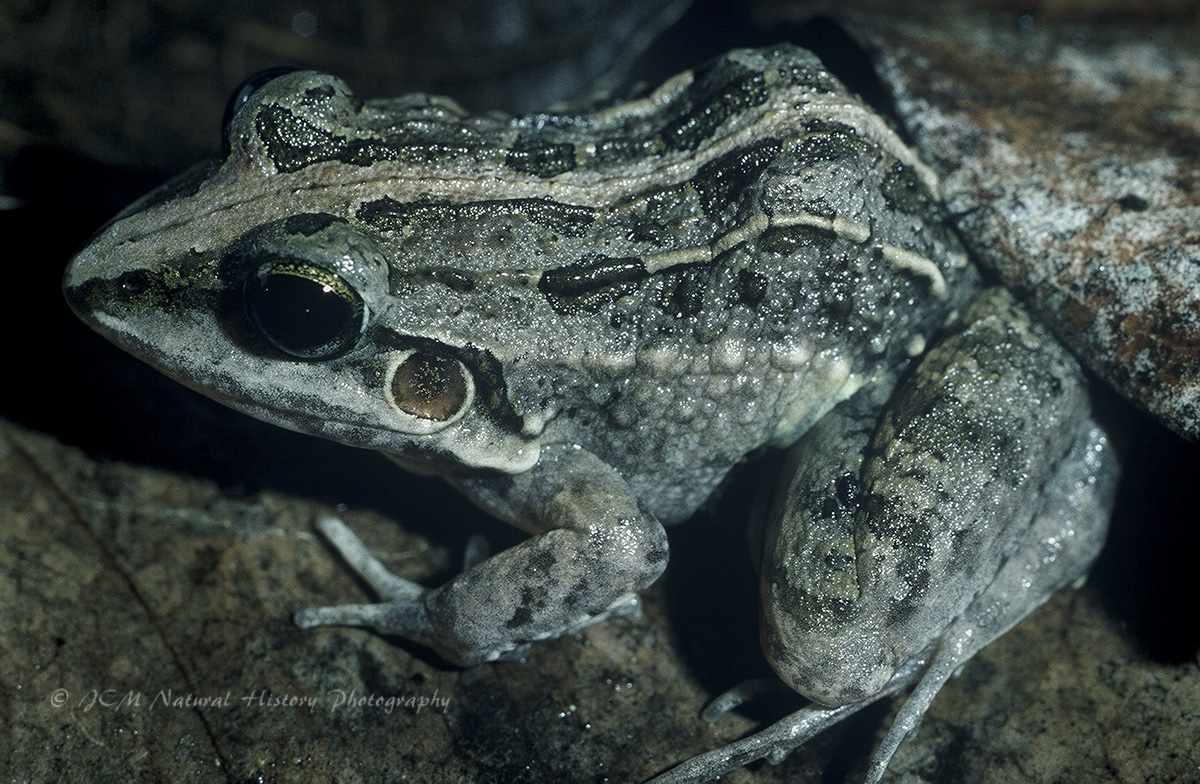
Leptodactylus fuscus

Information on amphibian diversity in Neotropical savannas and in protected areas in the Caribbean is lacking. We evaluated amphibian diversity and species composition in the Aripo Savannas Scientific Reserve in Trinidad, in relation to the two major habitat types, savanna, and marsh forest. Auguste and Hailey (2018) surveyed thirty 200-m-long transects were sampled visually and aurally in 4 periods (total 120 samples), with 10 transects in savanna, and 20 in marsh forest (10 along trails and 10 off trails), at night in the wet season from June to December 2015. We recorded 895 individuals representing 16 species, 11 genera, and 7 families, with greater counts and diversity of amphibians in marsh forest compared to savanna. The three species recorded in the savanna (Leptodactylus fuscus, Scinax ruber, and Rhinella beebei) were also found in marsh forest, with no separate savanna amphibian community. Audio detection was more effective at sampling most species, and there were greater counts along trails compared to transects off trails.

Auguste RJ, Hailey A. 2018. Diversity and Species Composition of Amphibians of the Aripo Savannas Scientific Reserve, Trinidad, West Indies. Journal of Herpetology. 52(1):86-93.